
How to Grind Meat for Burgers at Home: Complete Guide
Learning how to grind meat for burgers at home is one of the best upgrades you can make to your patties. Freshly ground beef is juicier, more tender, and far more flavorful than most pre-packed ground meat. At Zac’s Burger in Princeton Junction, NJ, we are big believers in fresh grass-fed beef and made-to-order burgers, so we love sharing what we know. This guide covers cuts, fat ratios, equipment, technique, and storage.
If you want the full picture of building a great burger from bun to topping, start with our pillar guide, how to make the perfect burger at home. This article goes deep on just one step: the grind.
Why Grind Your Own Burger Meat at Home
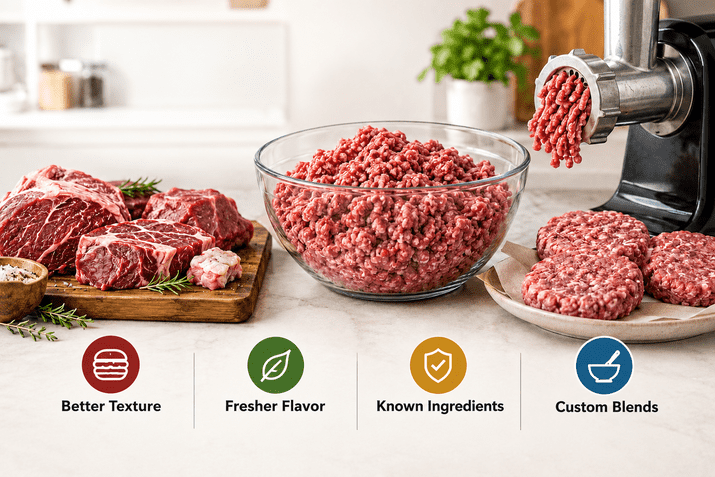
Grinding at home gives you control over three things: what goes into the meat, how fine or coarse it is, and how fresh it is.
- Better texture: A loose, coarse grind gives patties a tender bite instead of a dense, pasty one.
- Fresher flavor: Meat ground minutes before cooking tastes cleaner and beefier.
- Known ingredients: You choose the cuts, so you know exactly what is in your burger.
- Custom blends: You can build your own signature mix of rich and lean cuts.
For halal households, grinding at home also means you start with halal-certified beef from a butcher you trust and keep the whole process under your own roof.
Best Cuts of Beef for Grinding Burgers
If you have wondered what meat to grind for burgers, the answer is a mix of cuts that balance flavor and fat. Here are reliable choices:
- Chuck: The classic. Beefy flavor and a natural fat content near 15 to 20 percent. If you only use one cut, use this.
- Brisket: Adds rich, deep flavor and extra fat.
- Short rib: Buttery and rich, great for a premium blend.
- Sirloin: Leaner, with a clean beef flavor. Best mixed with a fattier cut.
A simple starter blend is equal parts chuck and brisket, or chuck with a little short rib. Grass-fed beef tends to be leaner and have a distinct, more mineral flavor, so you may want to keep the fat on your trimmings rather than cutting it away.
Understanding Fat-to-Lean Ratios for Perfect Patties
Fat is what makes a burger juicy. The most common answer to the best fat percentage for burger meat is around 20 percent fat, often written as 80/20. Many cooks like a range of 15 to 25 percent depending on taste and cooking method.
- 90/10: Lean and often dry. Better for recipes that add moisture.
- 85/15: A good balance for grilling, with fewer flare-ups.
- 80/20: The sweet spot for juicy, flavorful burgers, especially smashed or pan-seared.
- 70/30: Very rich. Can shrink a lot and feel greasy.
If your cuts are too lean, add a little beef fat trimming or a piece of fatty brisket to the mix. If you are watching your intake, see our healthy burger recipes for lighter ideas.
Equipment Options: Meat Grinders vs Food Processors
Using a Meat Grinder
A meat grinder for burgers, whether a stand mixer attachment, a countertop electric model, or a hand-crank unit, produces the most consistent results. Use the coarse plate (about 6 to 8 mm holes) for burgers. A finer plate can make patties dense.
Grinding Beef Without a Meat Grinder
Yes, you can grind meat in a food processor for burgers. It works well when done carefully:
- Cut the beef into 1 inch cubes.
- Work in small batches so the pieces chop evenly.
- Pulse in short bursts, about 8 to 10 pulses, and stop when the meat looks coarsely chopped.
Do not run the processor continuously or you will end up with a paste. A sharp knife is another option: freeze the meat briefly, then chop it very finely by hand for a steak-tartare-style texture that makes a rustic burger.
Step-by-Step Guide to Grinding Burger Meat
- Choose and trim: Pick your cuts, then remove silver skin and tough gristle. Keep the good fat.
- Cube: Cut the meat into 1 inch pieces so it feeds smoothly.
- Chill: Spread cubes on a tray and freeze for 15 to 30 minutes until firm outside but not frozen solid.
- Grind: Feed cubes through the coarse plate into a chilled bowl. For a looser texture, grind once only.
- Mix gently: Fold the meat lightly with your hands. Do not knead.
- Form patties: Shape quickly, about 4 to 6 ounces each, with a slight dimple in the center.
- Season at the end: Salt just before cooking. Try ideas from our burger seasoning guide.
Grinding frozen meat for burgers is not recommended when fully solid, because it can strain the machine and smear the fat. Partially frozen is the goal.
Keeping Everything Cold: Temperature Control Tips
Cold fat grinds into distinct particles. Warm fat smears, clogs the grinder, and gives you greasy, dense patties.
- Chill the grinder head, blade, and plate in the freezer for 30 minutes before use.
- Set your mixing bowl over a larger bowl of ice.
- Work in batches and return meat to the fridge between rounds.
- Wash hands and surfaces well, and keep raw beef away from ready-to-eat foods.
Food safety matters more with home grinding because the whole piece is ground, so bacteria on the surface mix throughout. Keep meat refrigerated at 40°F or below and cook burgers to 160°F internal temperature, the USDA recommendation for ground beef.
How to Store Freshly Ground Burger Meat
Fresh ground beef is best cooked the same day. If you need to store it:
- Refrigerator: Keep covered at 40°F or below and use within 1 to 2 days.
- Freezer: Form patties, separate them with parchment, and wrap tightly. Use within 3 to 4 months for best quality.
When you are ready to cook from frozen, our guide on how to cook frozen burgers walks you through it, and you can find more recipes and tips in our Burger category.
Skip the Grinding, Enjoy a Fresh Burger
Grinding at home is rewarding, but some nights you just want a great burger without the work. Stop by Zac’s Burger in Princeton Junction for 100% halal, handcrafted burgers made with fresh grass-fed beef, or order online for pickup. Planning a party? Ask us about catering.