






Burger Nutrition Facts: Calories, Protein & Healthier Choices
Understanding burger nutrition facts helps you make informed choices whether you’re eating out or cooking at home. A typical burger can range from 300 to over 1,000 calories depending on the patty size, toppings, and bun type. This guide breaks down the nutritional content of different burger styles and shows you how to enjoy burgers while meeting your dietary goals.
Understanding Basic Burger Nutrition
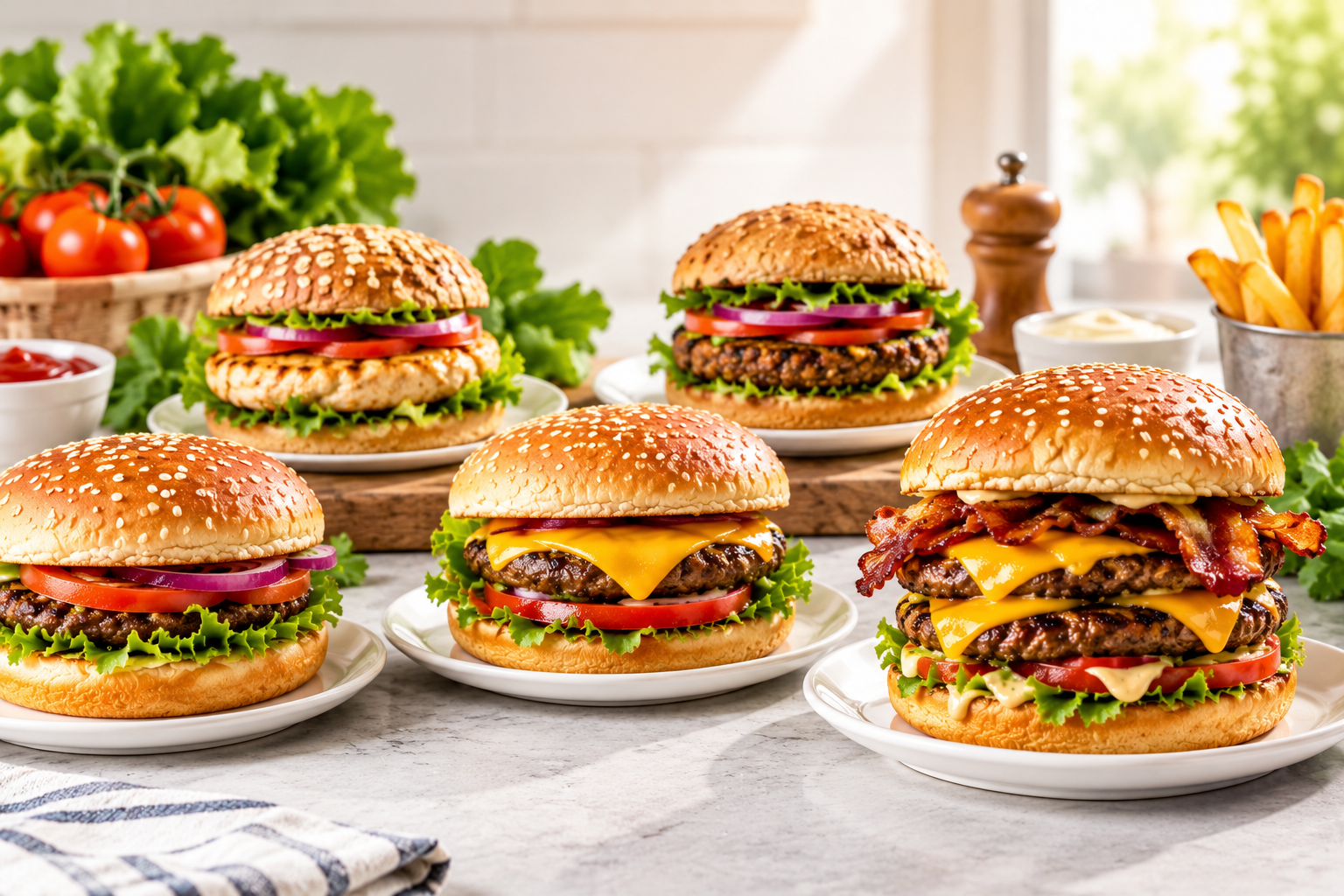
A standard quarter-pound hamburger with a bun contains approximately 400-500 calories, 20-25 grams of protein, 18-25 grams of fat, and 30-40 grams of carbohydrates. The exact hamburger nutritional information varies based on cooking method, meat fat percentage, and bun size.
The macronutrient breakdown typically looks like this:
- Protein: 20-40 grams (depending on patty size and type)
- Fat: 15-50 grams (varies significantly with meat choice and toppings)
- Carbohydrates: 30-50 grams (mostly from the bun)
- Sodium: 600-1,500 milligrams (bun, meat, and condiments contribute)
When learning how to make the perfect burger at home, you gain complete control over these nutritional values by choosing your ingredients carefully.
Calories in Different Types of Burgers
How many calories in a burger depends heavily on size and preparation. Here’s a realistic breakdown of common burger styles:
Basic Hamburger (quarter-pound patty): 400-500 calories
Cheeseburger (with American cheese): 500-600 calories. How many calories in a cheeseburger with bun increases by about 100 calories when you add a slice of cheese.
Bacon Cheeseburger: 650-750 calories. Two strips of bacon add roughly 80-100 calories and considerable sodium.
Double Cheeseburger: 700-900 calories. Doubling the patty nearly doubles the protein but also significantly increases fat content.
Fast-Food Premium Burger: 800-1,200 calories. Restaurant burgers with special sauces, multiple toppings, and larger buns push calorie counts higher.
Turkey Burger: 350-450 calories. Using ground turkey (especially lean turkey) can reduce calories by 15-20 percent compared to beef.
Veggie Burger: 300-450 calories. Plant-based patties vary widely, with some newer alternatives matching beef’s calorie count.
Protein Content: How Burgers Stack Up
Are burgers high in protein? Yes, burgers are an excellent protein source. A quarter-pound beef patty provides approximately 20-25 grams of protein, while a half-pound patty delivers 40-50 grams.
Burger protein content by type:
- 80/20 ground beef (quarter-pound): 22-24 grams
- 90/10 ground beef (quarter-pound): 24-26 grams
- Ground turkey (quarter-pound): 22-24 grams
- Bison burger (quarter-pound): 24-26 grams
- Plant-based patty (quarter-pound): 18-22 grams
- Chicken burger (quarter-pound): 26-28 grams
The bun adds 5-8 grams of protein, while cheese contributes another 6-7 grams. A cheeseburger easily provides 30-35 grams of protein, making it a substantial protein source for most adults.
Fat and Sodium in Typical Burgers
Fat content varies dramatically based on meat selection. An 80/20 beef patty (80% lean, 20% fat) contains about 20-25 grams of fat per quarter-pound, with roughly 8-10 grams being saturated fat. A 90/10 patty reduces this to 12-15 grams total fat and 5-6 grams saturated fat.
Sodium levels in burgers often surprise people. A basic hamburger typically contains 600-800 milligrams of sodium, with sources including:
- Bun: 200-300 mg
- Seasoned patty: 200-400 mg
- Cheese slice: 150-200 mg
- Condiments (ketchup, mustard, pickles): 150-300 mg
Restaurant burgers often exceed 1,200 milligrams, and some premium burgers top 2,000 milligrams, approaching the entire recommended daily limit.
Nutrition Breakdown by Burger Component
Understanding each component helps you customize healthy burger nutrition:
The Patty
A four-ounce beef patty (80/20) contains approximately 280-300 calories, 22 grams protein, and 20 grams fat. Switching to 93/7 lean beef drops this to 200 calories and 10 grams fat while maintaining protein.
The Bun
A standard white hamburger bun adds 120-150 calories, 3-4 grams protein, and 25-30 grams carbohydrates. Whole wheat buns offer similar calories but more fiber (3-4 grams vs. 1 gram).
Cheese
One slice of American cheese adds 70-100 calories, 6 grams protein, 6-8 grams fat, and 150-200 mg sodium. Cheddar, Swiss, and pepper jack have similar profiles.
Toppings and Condiments
Learning about burger toppings and sauces reveals significant nutritional differences. Lettuce, tomato, onion, and pickles add minimal calories (5-15 each) but boost vitamins and fiber. Mayo adds 90-100 calories per tablespoon, while ketchup and mustard add 15-20 calories.
How to Reduce Calories Without Losing Flavor
The healthiest way to eat a burger involves smart substitutions rather than deprivation:
Choose leaner meat: Switching from 80/20 to 90/10 beef saves 80-100 calories per patty without sacrificing much juiciness if you don’t overcook it.
Go open-faced: Removing the top bun cuts 60-75 calories and 15-20 grams of carbohydrates while keeping the burger experience largely intact.
Load up vegetables: Extra lettuce, tomatoes, onions, and mushrooms add volume and nutrients for minimal calories, making the burger more satisfying.
Skip or reduce special sauces: Restaurant special sauces often contain 100-150 calories per serving. Mustard, hot sauce, or a small amount of ketchup keeps flavor while cutting 80-120 calories.
Smaller patty, more toppings: A three-ounce patty with generous vegetables satisfies without the calorie load of a half-pound patty.
Use lettuce wraps: Replacing the bun with large lettuce leaves eliminates 120-150 calories and all the refined carbohydrates.
Many healthy burger recipes incorporate these strategies while maintaining the satisfying experience of eating a great burger.
High-Protein, Lower-Fat Burger Options
For those prioritizing protein while managing fat intake, several options deliver excellent nutrition:
Ground turkey breast (99% lean): A quarter-pound patty provides 26-28 grams protein with just 4-5 grams fat and 150-160 calories. The extremely lean nature requires careful cooking to avoid dryness.
Ground chicken breast: Similar to turkey with 26-28 grams protein, 5-6 grams fat, and 160-170 calories per quarter-pound.
Bison burger (90/10): This delivers 24-26 grams protein with 10-12 grams fat and 200-220 calories, plus higher iron content than beef.
Salmon burger: A four-ounce salmon patty offers 24-26 grams protein, 8-10 grams fat (mostly healthy omega-3s), and 180-200 calories.
Extra-lean beef (95/5): Provides 24-25 grams protein with just 6-7 grams fat and 180-190 calories per quarter-pound, though it requires extra care to stay juicy.
Pairing any of these proteins with a whole wheat bun, reduced-fat cheese, and vegetable toppings creates a burger with 35-40 grams protein and under 450 calories.
Making Burgers Fit Your Diet Goals
Burgers can align with virtually any eating plan when constructed thoughtfully:
For Weight Loss
Focus on portion control and lean proteins. A turkey burger on a whole wheat bun with vegetables and mustard delivers satisfaction for 400-450 calories. Open-faced options or lettuce wraps reduce this further to 300-350 calories.
For Muscle Building
Double the patty or use a larger single patty to reach 40-50 grams of protein. Add an egg for another 6 grams. The higher calorie count (700-800) supports muscle growth when training.
For Low-Carb or Keto Diets
Lettuce-wrapped burgers with full-fat beef, cheese, bacon, and avocado provide high fat and protein with minimal carbohydrates (under 10 grams without the bun).
For Heart Health
Choose lean proteins (turkey, chicken, or 90/10 beef), skip or use reduced-fat cheese, load vegetables, and watch sodium by limiting pickles, processed cheese, and salty condiments.
For Balanced Nutrition
A standard burger with 90/10 beef, one slice of cheese, whole wheat bun, and vegetable toppings offers balanced macronutrients: approximately 500 calories, 30 grams protein, 20 grams fat, 45 grams carbohydrates, and 4-5 grams fiber.
Understanding burger nutrition facts empowers you to enjoy burgers regularly while supporting your health goals. Whether you’re cooking at home or ordering out, knowing the nutritional breakdown of each component helps you make choices that satisfy both your taste buds and your body’s needs.