
Resting Burgers After Cooking: Why and How Long
Resting burgers after cooking is one of the easiest ways to get a juicier bite, and it costs you nothing but a few minutes. Most of us know to rest a steak. Burgers get skipped because they are small, hot, and tempting. Here at Zac’s Burger in Princeton Junction, NJ, we make our halal burgers with fresh grass-fed beef, and we know a patty tastes best when it is handled with care right up to the moment it hits the bun. This guide explains why a short rest works, how long to do it, and how to avoid dry burgers at home.
The Science Behind Resting Cooked Meat
When meat cooks, the heat tightens the muscle fibers and pushes moisture toward the center of the patty. If you cut or bite into it right off the heat, much of that liquid is still loose and runs out onto your plate or bun.
During a rest, the temperature inside evens out and the fibers relax a little. The juices settle and are held better in the meat. The result is a patty that tastes moister and stays together better when you bite into it.
Why Burgers Benefit from a Short Rest
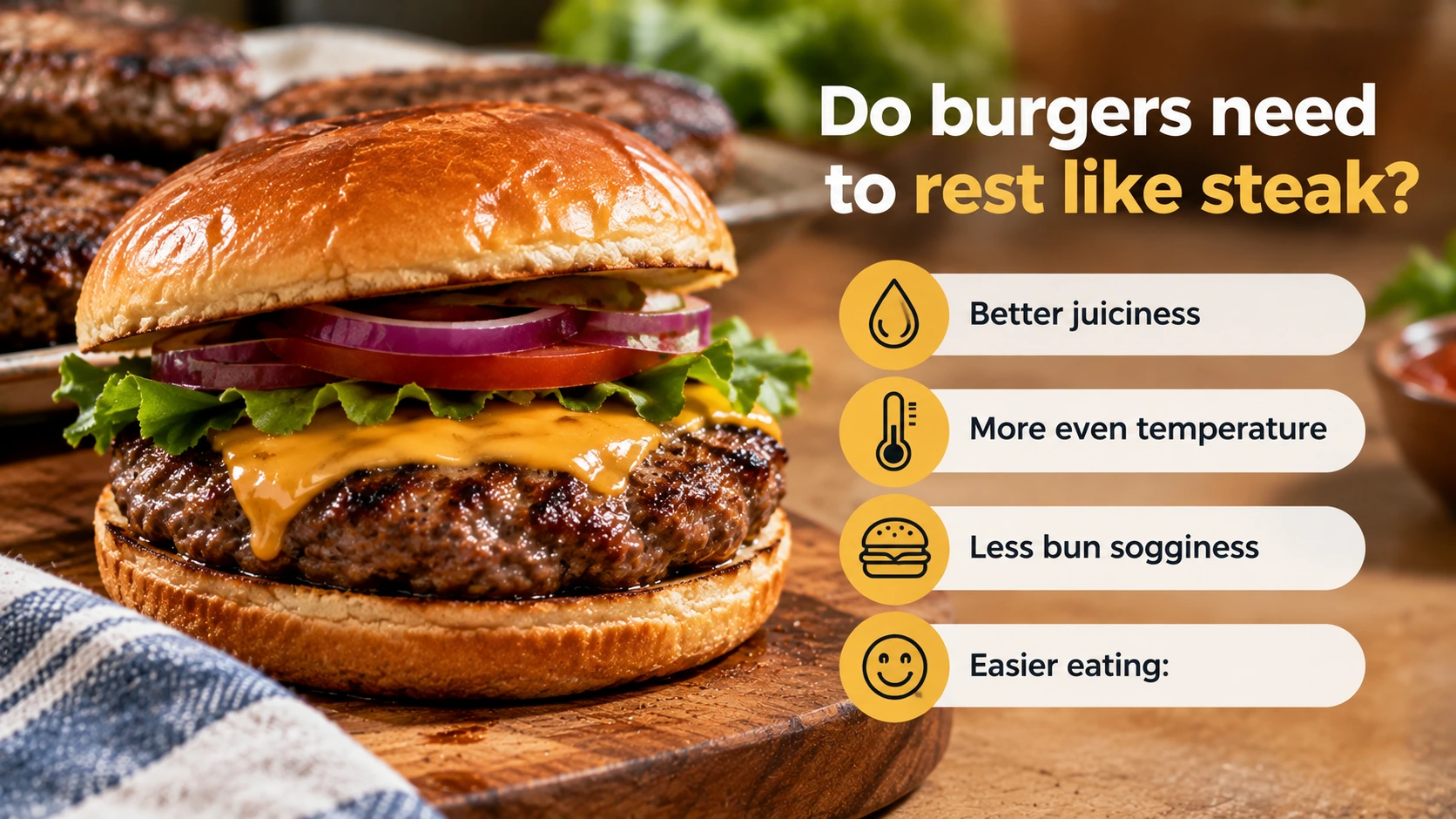
Do burgers need to rest like steak? Yes, but for much less time. A burger patty is thin and ground, so it does not need the long rest of a thick roast. Still, does resting burgers make a difference? In our experience, yes. A brief pause gives you:
- Better juiciness: less liquid escapes on the first bite.
- More even temperature: the outer edge and center equalize.
- Less bun sogginess: a patty that is not flooding juice keeps the bread crisp and sturdy.
- Easier eating: toppings and sauces stay put.
So, should you rest burgers after cooking? For the best result, yes.
How Long Should You Rest a Burger
For most hamburgers, the resting time is about 3 to 5 minutes. Thinner smash-style patties need only 1 to 2 minutes, since they cool quickly. Thick, half-pound patties can use the full 5 minutes.
Do not go much longer than that. Burgers are small, and a long rest means a lukewarm patty and melted cheese that has gone stiff. If you are asking how long a burger should rest before eating, think of it as the time it takes to toast the buns and set out the toppings.
Tenting vs Uncovered: Best Resting Method for Burgers
Resting burgers under foil is a popular method, but it needs a light touch.
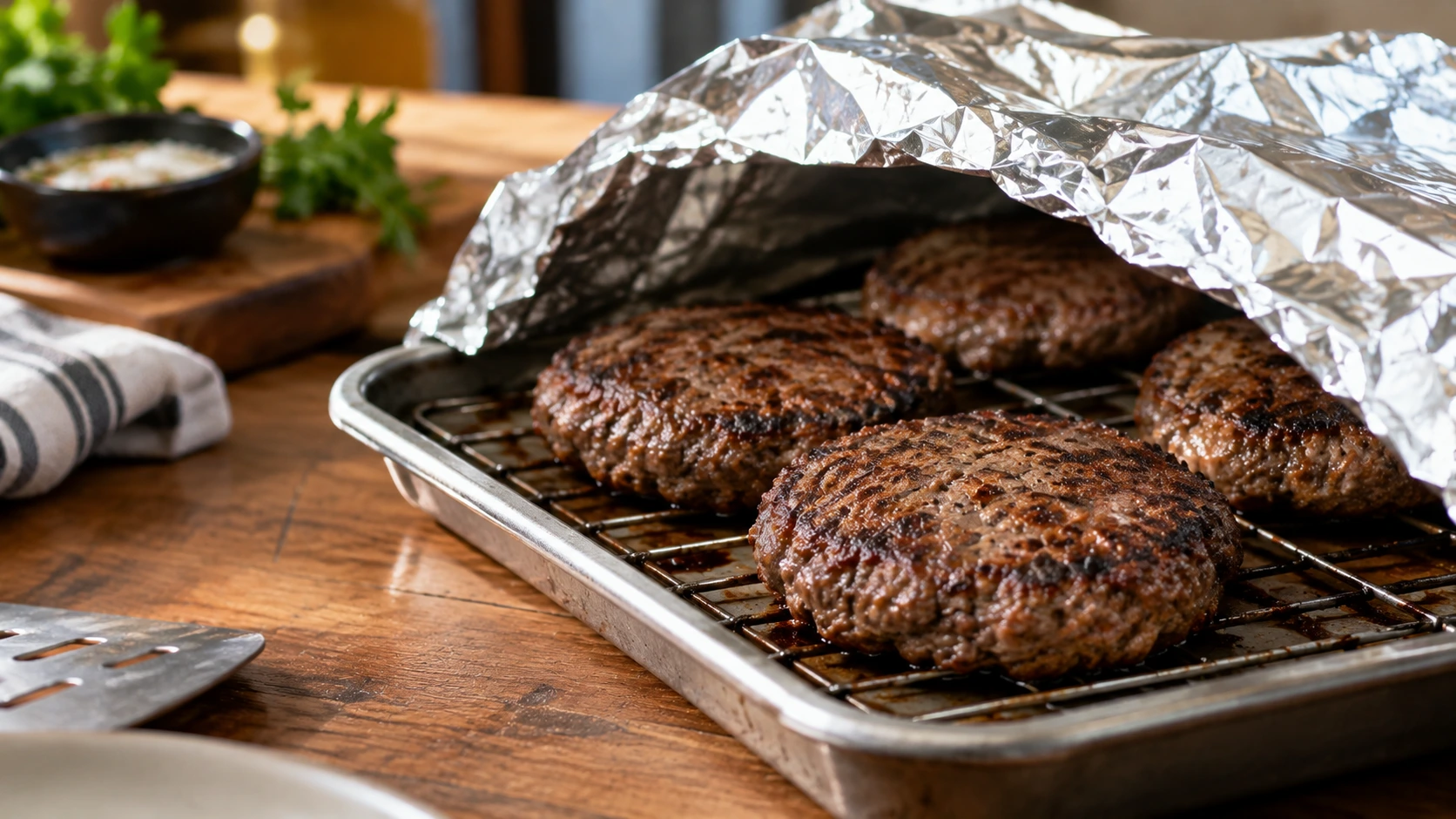
- Loose foil tent: Place the patties on a plate or rack and cover loosely. This holds in warmth, which helps when you are cooking for a crowd or serving outdoors in cooler weather.
- Uncovered: Best for smash burgers and for anything with a crisp, seared crust, since trapped steam softens the exterior.
- Wire rack: Resting on a rack over a plate keeps the bottom of the patty from steaming in its own juices.
Never wrap the foil tightly. A tight wrap traps steam and can overcook the meat while it sits. If you add cheese, melt it during the last minute on the heat, then rest the patty with the cheese on top.
Carryover Cooking: Factoring Rest Time Into Doneness
Burger carryover cooking means the patty keeps rising in temperature after you take it off the heat. On a thin patty the rise is small, but it is real, especially after a hot sear.
The safe approach is to cook ground beef to an internal temperature of 160°F, which is the USDA guidance for ground meat. Check with an instant-read thermometer in the side of the patty. Because carryover adds a few degrees, pull the patty when it is close to target and let it finish during the rest, but do not undercook ground beef on purpose. If you are unsure about timing, our guide on how long to grill burgers covers it step by step.
Resting Multiple Patties: Timing for Batch Cooking
Cooking for a family or a backyard gathering? Resting actually makes batch cooking easier.
- Cook patties in rounds, moving each finished batch to a rack or tray.
- Tent loosely with foil to hold warmth.
- Toast buns and prep toppings while the last batch cooks.
- Assemble all burgers together so everyone eats at once.
Keep rested patties in a single layer, not stacked, so they do not steam each other. For larger events, you can skip the work altogether. Zac’s Burger offers catering around Princeton, NJ for parties and gatherings, with halal burgers made fresh.
Common Mistakes That Lead to Dry Burgers
If you have ever wondered why your homemade burgers are dry, rest time is only one piece. Watch for these:
- Pressing the patty with a spatula: this squeezes out the juices you want to keep.
- Overcooking: go by temperature, not guesswork.
- Lean beef only: a little fat keeps burgers tender, so choose a blend with enough fat.
- Overworking the meat: mix gently and form patties lightly.
- Skipping the rest: cutting in right away lets juices escape.
- Resting too long: a cold burger tastes dull.
Want to cover the whole process from start to finish? Our pillar guide on how to make the perfect burger at home walks through meat choice, seasoning, cooking, and assembly. You can also browse more tips in our burger category.
Final Thoughts
Resting burgers after cooking takes just a few minutes and rewards you with a juicier, more flavorful burger. Aim for 3 to 5 minutes, tent loosely if needed, and always check for a safe internal temperature. And if you would rather skip the cooking, stop by Zac’s Burger in Princeton Junction or order online for a fresh, made-to-order halal burger.