
How Long to Grill Burgers: Perfect Timing Guide
Knowing exactly how long to grill burgers can mean the difference between a juicy, flavorful patty and a dry, overcooked disappointment. Whether you’re firing up the grill for a weekend cookout or perfecting your weeknight dinner routine, timing and temperature are your secret weapons. This guide walks you through precise grilling times for every doneness level, so you can serve restaurant-quality burgers right from your backyard grill.
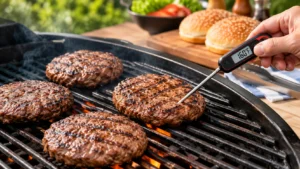
For standard three-quarter-inch thick burger patties cooked over medium-high heat (about 375-450°F), here’s your quick reference:
- Rare (120-125°F): 2-3 minutes per side
- Medium-Rare (130-135°F): 3-4 minutes per side
- Medium (140-145°F): 4-5 minutes per side
- Medium-Well (150-155°F): 5-6 minutes per side
- Well-Done (160°F+): 6-7 minutes per side
These times assume you flip your burgers only once. Keep in mind that thicker patties need more time, while thinner smash-style burgers cook much faster (often just 2-3 minutes total).
Factors That Affect Burger Grilling Time
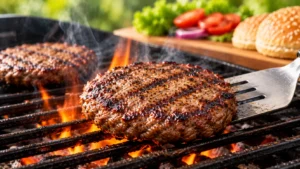
Several variables influence how long to cook burgers on a charcoal grill or gas grill. Understanding these factors helps you adjust on the fly:
Patty thickness: A quarter-inch smash burger cooks in 2-3 minutes total, while a one-inch steakhouse-style patty may need 10-14 minutes. Thickness matters more than weight when calculating burger grilling time.
Grill temperature: Medium-high heat (375-450°F) is ideal. If your grill runs hotter, reduce cooking time slightly. Lower heat extends cooking time and risks drying out the meat.
Starting temperature: Patties straight from the fridge take longer than those at room temperature. Let your burgers sit out for 15-20 minutes before grilling for more even cooking.
Fat content: Leaner beef (90/10) cooks faster than fattier blends (80/20) but also dries out more quickly. Higher fat content provides a buffer against overcooking.
Weather conditions: Cold, windy days lower your grill temperature and extend cooking time. On hot summer days, your grill may run hotter than the dial indicates.
Grilling Times by Doneness Level
Each doneness level offers a different texture and flavor profile. Here’s what to expect and how to achieve it:
Rare and Medium-Rare
For grilling burgers medium rare (130-135°F), cook for 3-4 minutes per side over medium-high heat. The center will be warm and red with plenty of juice. Rare burgers (120-125°F) need just 2-3 minutes per side but aren’t recommended for ground beef due to food safety concerns. The USDA recommends cooking ground beef to at least 160°F to eliminate harmful bacteria.
Medium
Medium burgers (140-145°F) hit the sweet spot for many grillers, balancing moisture with a slight pink center. Cook for 4-5 minutes per side. You’ll see clear juices beginning to pool on the surface when it’s ready to flip.
Medium-Well and Well-Done
Medium-well (150-155°F) requires 5-6 minutes per side, yielding a mostly brown interior with just a hint of pink. Well-done burgers (160°F and above) take 6-7 minutes per side. At this temperature, the meat is fully cooked through with no pink remaining. To keep well-done burgers juicy, choose higher-fat ground beef and avoid pressing down on the patties while cooking.
Using a Meat Thermometer for Perfect Burgers
Visual cues help, but a meat thermometer guarantees accuracy. Insert an instant-read thermometer through the side of the patty into the center, parallel to the grill grates. This gives you the burger internal temperature without creating a hole that lets juices escape from the top.
Check the temperature about a minute before your estimated finish time. Remember that burgers continue cooking after you remove them from the grill (carryover cooking adds about 5 degrees), so pull them off when they’re 5°F below your target temperature.
For safe consumption, the USDA recommends a minimum internal temperature of 160°F for ground beef. If you prefer your burgers less done, use freshly ground beef from a trusted source and handle it with proper food safety practices.
Gas Grill vs. Charcoal: Does Timing Change
The short answer: not significantly, if both are at the same temperature. However, the grilling experience differs slightly between the two.
When learning how long to grill burgers on a gas grill, you benefit from consistent, controllable heat. Preheat for 10-15 minutes, set your burners to medium-high, and follow the timing guidelines above. Gas grills make it easier to maintain steady temperature throughout the cook.
Charcoal grills typically run hotter and add a smoky flavor that gas can’t match. The key is getting your coals to the right stage: wait until they’re covered with white ash and glowing red underneath. Create a two-zone fire with coals banked on one side for direct high heat and an empty side for indirect cooking if burgers start charring too quickly.
Charcoal heat fades over time, so if you’re cooking multiple batches, the first burgers may cook faster than the last. Add fresh coals as needed to maintain temperature.
How Thick Should Your Patties Be
The ideal thickness depends on your style preference, but three-quarter-inch to one-inch thick works best for most backyard grillers. This thickness allows you to develop a good crust while keeping the interior juicy.
Form patties slightly wider than your buns (about 4-5 inches in diameter) since they shrink during cooking. Make a shallow dimple in the center with your thumb; this prevents the burger from puffing up into a meatball shape on the grill.
Smash burgers (quarter-inch or thinner) follow different rules: press them onto a screaming-hot grill or flat-top for maximum crust formation, cooking just 1-2 minutes per side. If you’re interested in mastering burger fundamentals beyond grilling time, check out our complete guide on how to make the perfect burger at home.
Flipping: How Many Times and When
Resist the urge to flip constantly. For best results, flip your burgers just once, halfway through the total cooking time. This allows each side to develop a proper crust and those coveted grill marks.
You’ll know it’s time to flip when the edges start to look cooked and opaque (about one-third of the way up the side), and the burger releases easily from the grates without sticking. If it sticks, give it another 30 seconds.
Never press down on burgers with your spatula. This squeezes out flavorful juices and fat, leaving you with a drier burger. If you see flare-ups from dripping fat, move the burger to a cooler part of the grill temporarily rather than pressing it.
Resting Your Burgers After Grilling
Once your burgers hit the target temperature, resist the temptation to serve immediately. Let them rest on a clean plate for 3-5 minutes, loosely tented with foil.
Resting allows the juices, which have been driven to the center by heat, to redistribute throughout the patty. Cut into a burger straight off the grill and those juices run out onto the plate. Wait a few minutes, and they stay where they belong: in every bite.
Use this resting time to toast your buns on the grill (30-60 seconds, cut-side down) and prepare your toppings. Your burgers will still be hot, but noticeably juicier.
Mastering burger grilling time transforms backyard cooking from guesswork into precision. Whether you prefer a juicy medium patty or a fully-cooked well-done burger, the combination of proper timing, temperature monitoring, and a good instant-read thermometer ensures perfect results every time. Fire up your grill, use this burger grilling time chart as your guide, and get ready to serve burgers that rival your favorite burger joint.